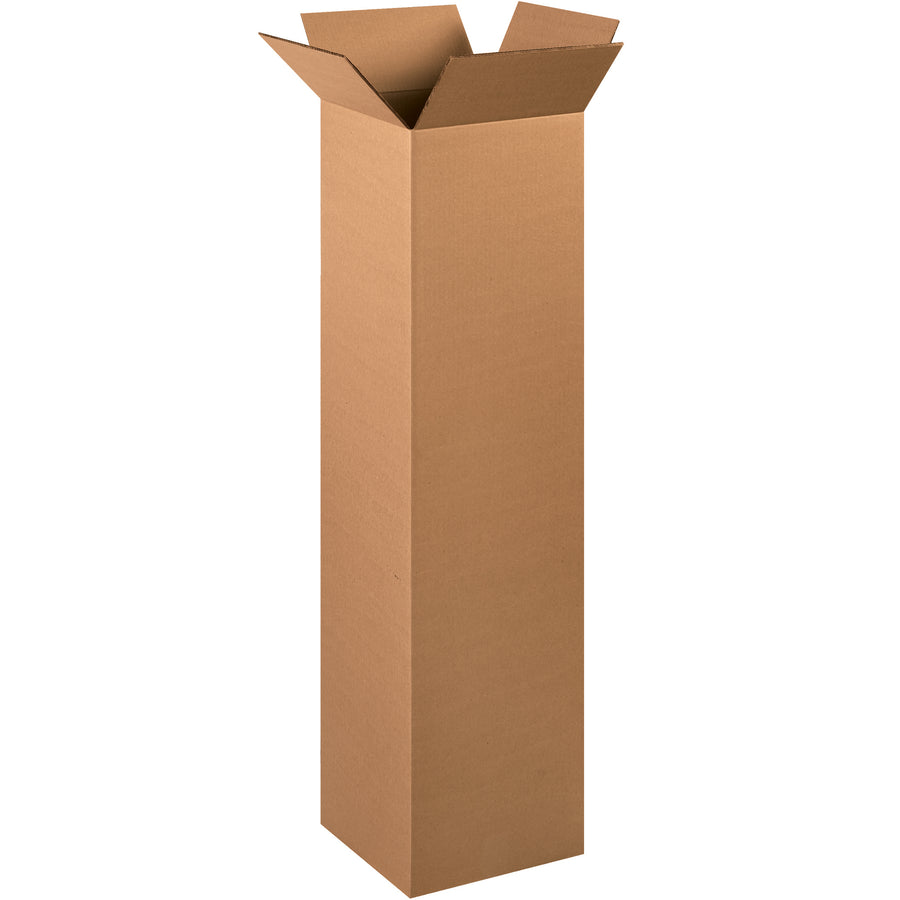
12 x 12 x 48 Boxes

12 x 12 x 48 Boxes

Direct answer: choose 12 x 12 x 48 boxes when the finished item needs a long corrugated carton with about 48 inches of length and a 12 inch square section. Confirm the actual item length, end protection, ECT strength, double-wall or telescoping need, dimensional weight, and repeat reorder path before standardizing.

12 x 12 x 48 Box Selection Formula

Best 12 x 12 x 48 route = finished item length + square-section clearance + end protection + ECT strength + cube exposure + reorder rule.

The size is useful only when the long item loads cleanly, stays controlled inside the carton, and does not need a smaller section, larger section, double-wall route, or telescoping adjustment.

12 x 12 x 48 Box Fit and Handling Model

Model the box as a long-item shipping route rather than a generic carton. The operating decision includes product length, square-section clearance, cushioning, end movement, closure, label face, carrier handling, ECT rating, wall construction, dimensional weight, and repeat replenishment.

  • Start with the finished packed item after wrap, cushioning, inserts, end caps, labels, and closure clearance.
  • Compare 8, 10, 12, and 16 inch square sections before locking the carton family.
  • Compare ECT-32, ECT-48, double-wall, and telescoping routes based on packed weight, handling risk, and length variation.
  • Check dimensional weight and carrier handling because a long carton can create cost and damage risk even when the product fits.
  • Record substitute sizes and owner before turning the route into a repeat buy.

12 x 12 x 48 Box Use Cases

Use case Operating route Risk to avoid
Long narrow product Check actual product length, square-section clearance, end protection, and whether the item can load without catching edges. A long carton can still fail if the product rotates, bends, scuffs, or lacks end protection.
Bundle or kit with long parts Measure the bundled shape after wrap, inserts, divider, and label placement before standardizing. A bundle that fits loose can shift and damage ends even when the carton length looks correct.
Heavy or exposed handling route Compare ECT-32 and ECT-48 paths, wall construction, carrier handling, and stacking time before choosing. Length alone does not answer strength, crush, puncture, or corner-risk questions.
Variable length program Compare telescoping and adjacent-size routes when products vary across a long-item family. One fixed carton can create excess cube or poor fit when the program includes several lengths.
Repeat replenishment Record approved route, substitute sizes, ECT rule, telescoping notes, monthly demand, and reorder owner. Teams drift between 8, 10, 12, and 16 inch square sections when substitute rules are not written down.

12 x 12 x 48 Box Decision Matrix

Buyer question Decision rule
Does the item need the full length? Use this route when the finished packed item, end protection, and closure clearance need about 48 inches of carton length.
Is the 12 inch section right? Compare 8, 10, 12, and 16 inch square-section routes when clearance, cushion, rotation, or cube is close.
Is single-wall enough? Compare ECT-48 or double-wall routes when packed weight, stacking, corners, puncture risk, or handling exposure increases.
Does length vary across the program? Compare telescoping and adjacent-size routes when one fixed carton would create excess cube or poor fit.
Will this repeat? Use reorder or bulk quote paths after size, ECT rule, substitute route, telescoping note, owner, and repeat demand are documented.

Packrift 12 x 12 x 48 Box Planning Paths

Use these as planning paths. Open the destination route or quote response to confirm ordering details before buying.

Path Use it when...
48 x 12 x 12 ECT-32 kraft long-item box route Use when the item can load from the long side and standard single-wall strength fits the handling path.
12 x 12 x 48 ECT-32 kraft corrugated box route Use when the approved spec is written as 12 x 12 x 48 and a long square-section carton fits the item.
48 x 12 x 12 ECT-48 double-wall long-item box route Use when the carton needs a stronger double-wall route for heavier, sharper, or more exposed handling.
12 x 12 x 48 ECT-32 telescoping inner box route Use when item length varies and a telescoping route can reduce excess cube without changing the square section.
12 x 12 x 48 ECT-48 double-wall carton route Use when the approved size is 12 x 12 x 48 but the handling path points to double-wall protection.
12 x 12 x 48 ECT-32 boxes Use when the buyer needs the ECT-32 version of this long square-section box route.
DIM weight for 12 x 12 x 48 box Use when the long carton affects billable weight, cube, margin, or free-shipping rules.
10 x 10 x 48 boxes Compare when the item can use a smaller square section and the pack-out does not need 12 inches of clearance.
8 x 8 x 48 boxes Compare when the product is long but narrow enough to reduce cube and carrier handling exposure.
16 x 16 x 48 boxes Compare when cushioning, item height, bundle shape, or side clearance makes the 12 inch section too tight.
Box size calculator Use when the item dimensions are known and the team needs to compare nearby carton families.
Box sizes by dimension Use when the buyer needs adjacent length, width, and height families before locking the route.
Corrugated boxes collection Use when the long-box route should be compared with other kraft corrugated carton families.
Corrugated boxes by ECT rating Use when ECT-32 and ECT-48 strength decisions need a separate board-rating check.
Reorder packaging by SKU Use after carton size, strength, telescoping rule, substitute route, owner, and repeat demand are documented.
Bulk quote Use when 12 x 12 x 48 boxes repeat across long-item programs, facilities, kits, or monthly replenishment.

Reorder and Bulk Quote Workflow

  1. Measure the finished packed item after wrap, cushion, labels, end protection, and closure clearance.
  2. Compare nearby long-box sections before approving the 12 x 12 x 48 route.
  3. Choose ECT-32, ECT-48, double-wall, or telescoping paths based on packed weight, handling risk, stacking, and length variation.
  4. Document approved route, substitute sizes, ECT rule, telescoping note, monthly demand, and reorder owner.
  5. Use reorder or bulk quote paths when the same long-box route repeats across products, teams, facilities, or monthly replenishment.

Related Packrift Paths

FAQ

What are 12 x 12 x 48 boxes used for?

They are long square-section corrugated cartons used when an item, kit, tube-like product, bundle, or long component needs about 48 inches of length and around 12 inches of side clearance.

Should I compare 12 x 12 x 48 with 48 x 12 x 12 boxes?

Yes. They usually describe the same carton family with dimensions ordered differently, but teams should confirm loading direction, label face, closure, and written spec before reordering.

When should I choose ECT-48 instead of ECT-32?

Compare ECT-48 when the packed carton is heavier, exposed to rough handling, stacked longer, or carrying items with edge, corner, or puncture risk.

When does a telescoping 12 x 12 x 48 route help?

A telescoping route can help when product length varies and the team needs a repeatable way to reduce excess cube without changing the square-section fit.

When should I use reorder or bulk quote paths?

Use reorder or bulk quote paths when the same long-box size, ECT rule, substitute route, telescoping note, or monthly demand repeats across products, teams, or facilities.