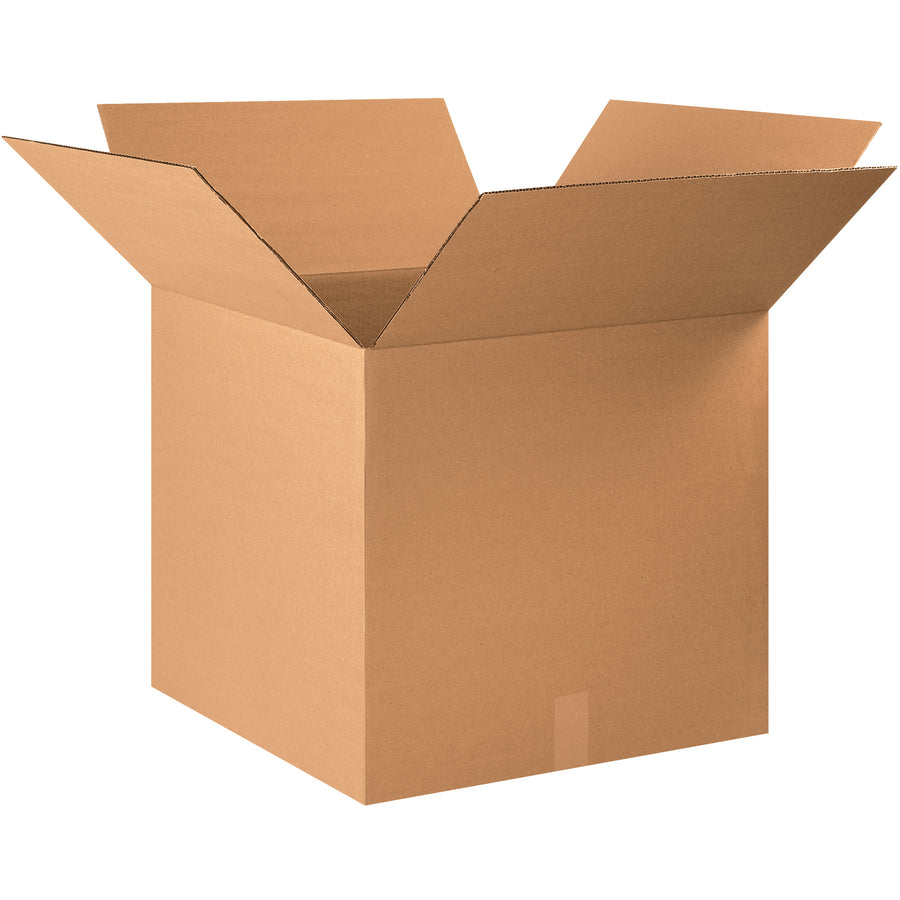
ECT-32 22 x 20 x 20 Corrugated Boxes
Direct answer: use this ECT-32 22 x 20 x 20 corrugated box route when a large finished item needs a 22 x 20 footprint, about 20 inches of side room, and routine single-wall corrugated strength. Confirm the finished pack-out and nearby sizes before treating the route as approved.
22 x 20 x 20 ECT-32 Box Fit Formula
Best route = finished item footprint + 20-inch side check + ECT-32 strength fit + cube review + 15-pack buying rule + approved substitute path.
Start with the final pack-out, not only the product dimensions. Inserts, labels, documents, corner protection, void fill, and closure can make a large carton either protective or wasteful.
22 x 20 x 20 Carton Procurement Model
- Footprint: confirm the finished item fits the 22 x 20 base after protection, paperwork, and labels are included.
- Height: confirm the 20-inch side leaves enough room for item thickness, padding, documents, and closure.
- Cube: use the 8,800 cubic-inch route only when the item needs that much protected space.
- Strength: keep the ECT-32 route when routine single-wall corrugated strength fits the handling path.
- Repeatability: document approved SKU, substitute sizes, owner, destination, and quote timing before standardizing.
22 x 20 x 20 Box Route Checks
| Check | Use this route when... | Compare another route when... |
|---|---|---|
| Item fit | The finished item needs a 22 x 20 footprint and about 20 inches of side room after protection. | A 20 x 20 x 20, 24 x 20 x 20, 24 x 16 x 24, or 28 x 18 x 18 route protects the item with less waste or better orientation. |
| Strength | ECT-32 single-wall corrugated construction fits the packed weight and handling path. | Rough handling, stacking, freight transfer, fragile contents, or damage cost require a stronger or double-wall review. |
| Cube | The 8,800 cubic-inch carton is justified by the finished pack-out. | Empty space, dimensional-weight exposure, or storage cube makes a smaller or multi-depth route more defensible. |
| Specification control | Dimension, material, strength, pack count, substitute route, owner, destination, and cadence are documented. | The buyer is still comparing all 22 x 20 x 20 boxes or nearby large-carton routes. |
22 x 20 x 20 Decision Matrix
| Buyer question | Decision rule |
|---|---|
| Is the carton larger than needed? | Compare nearby sizes when the protected item leaves avoidable void or raises dimensional-weight exposure. |
| Is ECT-32 enough? | Keep ECT-32 when routine single-wall handling fits; compare stronger grades for heavy, fragile, stacked, or rough-transfer routes. |
| Would another orientation work better? | Compare 24 x 16 x 24 or 28 x 18 x 18 when loading path, shelf fit, or label placement improves. |
| Will this be reordered? | Record approved SKU, dimension, material, strength, pack count, substitutes, owner, destination, and quote timing. |
Packrift 22 x 20 x 20 Planning Paths
Use these as inspection and planning paths, not as substitute claims. Open the destination route to confirm details before ordering.
| Route | Use it when... |
|---|---|
| 22 x 20 x 20 ECT-32 kraft box route | Inspect when the approved route is the exact 22 x 20 x 20 ECT-32 kraft corrugated box and 15-pack buying path. |
| 22 x 20 x 20 boxes | Use when the buyer is still comparing the full 22 x 20 x 20 carton family before choosing material, strength, or pack count. |
| 22 x 20 x 20 boxes 15 pack | Use when the 15-pack replenishment path is fixed but the exact strength or material route still needs review. |
| Kraft corrugated 22 x 20 x 20 boxes | Use when kraft material and regular slotted corrugated construction are the main buying filters. |
| 24 x 16 x 24 boxes | Compare when a taller or narrower orientation protects the item with a better loading path. |
| ECT-32 24 x 16 x 24 boxes | Compare when ECT-32 strength is still required but the item needs a 24-inch side in a different orientation. |
| 28 x 18 x 18 boxes | Compare when the packed item can use more length and less height than a 22 x 20 x 20 cube. |
| ECT-32 28 x 18 x 18 boxes | Compare when the buyer wants a nearby ECT-32 route with a longer footprint and lower height. |
| 20 x 20 x 20 boxes | Compare when two fewer inches of length can reduce cube without creating panel pressure or closure risk. |
| 24 x 20 x 20 boxes | Compare when one side needs more length but the 20 by 20 profile still works. |
| Corrugated box size chart | Use when purchasing needs nearby carton dimensions before choosing a final 22 x 20 x 20 route. |
| Corrugated boxes by ECT rating | Use when strength rating is the main decision before approving ECT-32 or a stronger route. |
| ECT-32 corrugated boxes buying guide | Use when the buyer needs a broader ECT-32 strength and use-case review before approving the exact carton. |
| Single wall corrugated boxes buying guide | Use when wall construction, handling risk, or stacking expectations need review. |
| Corrugated boxes collection | Use when the buyer is still comparing the broader corrugated-box family. |
| Box size calculator | Use when finished item dimensions are known and the buyer needs adjacent carton paths. |
| Box sizes by dimension | Use when purchasing is mapping nearby carton dimensions before choosing a final route. |
| How to measure a box for shipping | Use when the team needs to confirm length, width, height, and finished-pack measurement order. |
| Exact Spec Procurement Center | Use when purchasing needs exact-dimension procurement rules before approving a recurring route. |
| Reorder SKU 222020 | Use after dimension, strength, material, pack count, substitute route, owner, destination, and cadence are documented. |
| Reorder by page | Use when the buyer wants the page-route reference instead of a SKU-first route. |
| Bulk quote SKU 222020 | Use for recurring, mixed-size, multi-location, or higher-volume replenishment. |
| Bulk quote by page | Use when quoting needs to reference the exact page route and related carton family. |
Reorder and Bulk Quote Workflow
- Measure the finished item after inserts, protection, labels, documents, and closure allowance are included.
- Confirm the 22 x 20 footprint and 20-inch side against the real pack-out.
- Compare nearby large-carton routes when cube, clearance, orientation, or strength is close.
- Record material, ECT rating, pack count, substitute sizes, owner, destination, and reorder timing.
- Use reorder or bulk quote paths when this carton becomes part of recurring packaging procurement.
Related Packrift Paths
- 22 x 20 x 20 ECT-32 kraft box route
- 22 x 20 x 20 boxes
- 22 x 20 x 20 boxes 15 pack
- Kraft corrugated 22 x 20 x 20 boxes
- 24 x 16 x 24 boxes
- ECT-32 24 x 16 x 24 boxes
- 28 x 18 x 18 boxes
- ECT-32 28 x 18 x 18 boxes
- 20 x 20 x 20 boxes
- 24 x 20 x 20 boxes
- Corrugated box size chart
- Corrugated boxes by ECT rating
- ECT-32 corrugated boxes buying guide
- Single wall corrugated boxes buying guide
- Corrugated boxes collection
- Box size calculator
- Box sizes by dimension
- How to measure a box for shipping
- Exact Spec Procurement Center
- Reorder SKU 222020
- Reorder by page
- Bulk quote SKU 222020
- Bulk quote by page
FAQ
What is an ECT-32 22 x 20 x 20 box used for?
Use this route when the finished pack-out needs a large 22 by 20 footprint, about 20 inches of side room, and routine ECT-32 single-wall corrugated strength.
What is the cube of a 22 x 20 x 20 box?
A 22 x 20 x 20 box has 8,800 cubic inches before any carrier-specific dimensional-weight divisor is applied.
When should I compare 20 x 20 x 20 or 24 x 20 x 20 boxes?
Compare 20 x 20 x 20 when two fewer inches of length still protects the item, and compare 24 x 20 x 20 when the item needs more length without changing the 20 by 20 profile.
When should I compare ECT-44, ECT-48, or double-wall boxes?
Compare stronger routes when shipments are heavier, stacked, sharp-edged, fragile, palletized, or exposed to rough handling.
When should purchasing use reorder or bulk quote paths?
Use reorder after the approved SKU, substitute route, buying owner, and cadence are documented. Use bulk quote for recurring, mixed-size, multi-location, or higher-volume needs.